
Reflections on AI through the lens of Unification Thought
In recent years, I’ve seen various professionals express their distress about advances in technology which demonstrate its capacity to replace them—Hollywood actors, luthiers, musicians, producers, service industry persons, auto fans/designers and others. Having a lifelong appreciation of painstaking design and hand-craftsmanship, I’d empathized with their plight on those occasions when I’d find such articles. But I’d not been disturbed enough to think more deeply about it.
However, I recently listened to an audio rendition of written reflections by folks I knew that was generated by running a text file through an AI program. I was surprised that not one, but two narrators had been added, whose appreciative dialog thoughtfully grouped similar reactions, analyzed them, and drew interesting conclusions from them. The rawness of each person’s individual written thoughts was transformed into a very polished and convincing podcast. If I’d not been told that it was AI, I’d assume that it was an actual recorded, post-event conversation between flesh-and-blood male and female analysts.
But knowing the original text, I eventually identified what I missed: the raw immediacy and individuality of each person’s unfiltered, immediate thoughts—my sense of emotional connection to each of them through what they’d spontaneously expressed. That caused me to reflect more deeply on this matter than I’d ever done before. Then, one early morning before dawn, I sat up in bed to write down what had suddenly come to me:
In the Unification Thought theories of The Original Image and Original Human Nature, the Divine Character—which we have inherited from our Heavenly Parent—has three characteristics: Heart, Logos and Creativity. These three and their relationships manifest throughout Unification Thought’s theories. But that material is too extensive for the purposes of this article. So we’ll aim for brevity and simplicity here.
1. Heart
This is “the core of the attributes of God” according to Essentials of Unification Thought (p. 23). A later text adds this:
Heart (is) the emotional impulse to seek joy through love... the irrepressible desire that wells up from within... it is not possible to repress the impulse to seek joy... the impulse to seek love is stronger than the impulse to seek joy... the impulse of love is primary... Thus, God’s Heart can also be expressed as the emotional impulse to love infinitely. • New Essentials of Unification Thought, p. 23–24
And another text points out that Heart:
…wells up from the bottom of the mind; it is irrepressible, even for God Himself. • Explaining Unification Thought, p. 21
Such statements profoundly altered my notions about God and the value of human beings.
2. Logos
Though not disputing John’s gospel, Unification Thought naturally also speaks of logos in terms of philosophy:
Traditional systems of logic have focused primarily on the laws and forms of thought, but Unification logic begins by considering, first of all, the starting point of thinking itself. Unification logic starts from the question as to why thinking takes place at all… The reason is that, prior to the creation of the universe, God engaged in thinking. That is, prior to the creation of the universe, God established the purpose of actualizing love based on Heart, and then made plans in accordance with that purpose. That constituted His thinking, or Logos (Word). – New Essentials of Unification Thought, p. 458
The stunning conclusion about thought is (put simply): the very purpose of thought is the actualization of love.
3. Creativity
This attribute of our Divine Character is for the actual realization of love:
True creativity originates from God’s Creativity, which is based on heart and love. (it) should be based on heart and love, should be pursued for the realization of love—the Purpose of Creation. - Explaining Unification Thought, p. 43
These quotes are mere snippets from the various chapters on Original Image, Logic, Axiology and Art. In the effort to keep things short and simple here, we can summarize the essential relation of these three attributes of Divine Character:
The first (Heart) is the driving force behind the second; the second (Logos) applies reason to logically fulfill the first; and the third (Creativity) is the deeply considered and careful result of the first two. The accompanying figure is a simplified version of the idea, compiled from several that were created by Dr. Lee and which appear in his handouts.
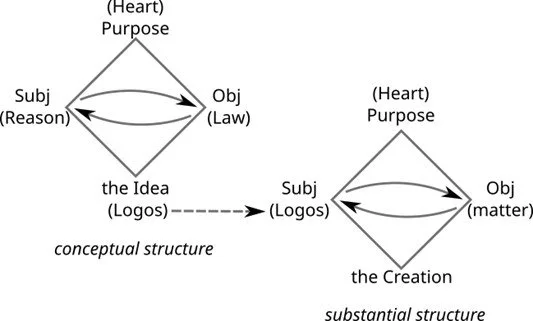
Fig 1: The Two-Stage Structure of Creation
Conclusion
In this light, I could clearly identify what the cause of my intuitive unease (with the podcast I’d first mentioned) actually was: The problem with AI is that its programmers don't know these defining characteristics about the Divine Character of both the Parent God and we human children. Heart gives rise to purpose; this purpose drives thinking; and the logically created result reflects this.
If the Purpose is true, beautiful and good, the outcome reflects this. If the purpose isn’t, neither is the outcome. History is full of examples where logical reason and creativity have been harnessed to accomplish all manner of ends—from the most sublime to the most appalling. Unification Thought stresses that the parental heart of benevolence is the true and original guide of original thought and creativity—its “north star” as it were.
So, in the medium- to long-term, AI guided by true purposes can help end cancer, poverty, drought, famine, disease and many other malaises that plague our world. But driven by false purposes, it might divide humanity between a tiny, competing, enormously wealthy ruling elite, a mercenary class of technologists whom they utilize, and everyone else. For decades now, there have been books and films about dystopian societies which depict this.
But what worries me in the short term is that our children and their children will be lulled into complacency and too much dependency on AI. Such a scenario would be crippling to their innate Divine Character—their Heart/Purpose, their Divine reason and their Divine Creativity—thereby stunting the growth of their own eternal and uniquely individual soul. They could be misdirected from fulfilling their First Blessing… No need to mention what that would mean for the providence and HP’s hopes.
When one of the world’s most prominent technologists[i] was asked what development excites him most about the future, he answered “AI”. And when asked what he fears most in the future, he answered “AI”. He’s repeatedly explained that the value biases that are programmed into AI by its coders is where the danger lies. Those biases are imbued into their work and thus its influence on the minds of the consumers who use it, knowingly or unknowingly. His conclusion was that AI must be guided by true values[ii] and that’s an issue that has driven our Movement from its outset.
[i] There are many results which crop up in a search for the risks of AI. But two years back there was already a meeting at the US Senate with technologists which was a good indicator. See: https://www.nbcnews.com/politics/congress/big-tech-ceos-ai-meeting-senators-musk-zuckerberg-rcna104738
[ii] Please see the Abonim’s extensive guidance on this matter of original values.