
Love Is Just A Memory
by Michael Downey

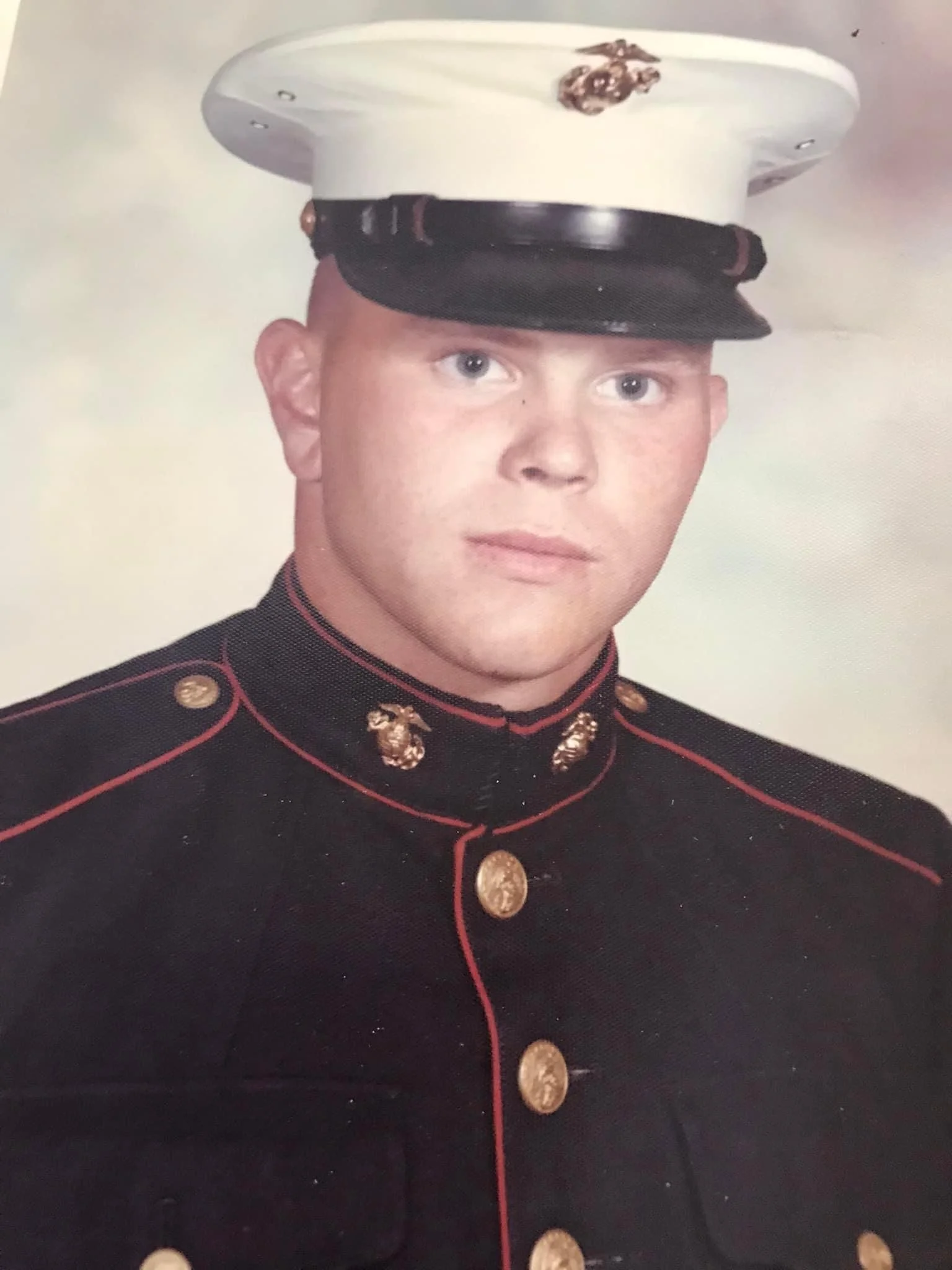
I first saw Father in Washington, D.C., in October of 1973. He spoke at Lisner Auditorium as a part of the Day of Hope Tour. I bought a ticket from a young lady who knocked on my door in Alexandria, Virginia. I told her at first that I wasn’t interested in buying tickets to a lecture. She knocked on the door again 15 minutes later and asked to use the bathroom. I said sure; I was interested in young ladies. We talked for a long time, and I coughed up the last of my money and bought a ticket.
On the night of the speech, I hitchhiked into D.C. since my Triumph TR-4 wouldn’t start—very temperamental. I considered it an odd experience. I remember thinking how strange it was for a Korean guy in a suit and tie to jump around and shout about God’s hope for America. The fellow doing the interpreting seemed a lot more reasonable. I was taken by the bright young people that I met. I was very attracted to the vibe that surrounded them. I suppose they were love-bombing me, but I liked it. After the event, I was out of there and back to duty at the Marine Barracks. No one ever recontacted me.
About two months later, I encountered these young people again. The Marine Band was scheduled to play at the national Christmas tree lighting ceremony on the Ellipse behind the White House. I pulled security detail and was posted to the right of the band shell in front of the band. President Nixon was in attendance and may have thrown the switch. What I saw amazed and puzzled me. As I stood at parade rest, I continually scanned the arriving crowd. In marched what I thought at that time was a vision of heaven—a whole troop of nine- or ten-year-old Korean girls in matching red coats, smiling and waving little blue and white pennants. They looked like angels. The crowd was mostly young people, and they were all waving the same triangle-shaped flags. When I looked closer, I saw that the writing on the flags said, “Forgive, Love and Unite.” Some said, “God loves Nixon.” How strange! This was the height of the Watergate crisis, and nobody loved Nixon, including, probably, God. Next, I recognized these young people. By their bright smiles, and I guess their vibe, I knew these were the same people that I met and liked so much at Lisner Auditorium. I wondered to myself, “What’s going on here, and what’s the connection?” It gets more amazing.
At the end of the ceremony, the President left the stage and, with his entourage, left the band shell, turned right, and rushed along the narrow pathway between the band shell and where the Marine Band was set up. Although surprised, I was no slouch. I had had some training, and I popped to attention, saluted and, in my best parade-deck voice, sounded off, “Good afternoon, Mr. President.” The President stopped, turned to me with a big smile, saluted, and said, “Thank you, Marine. Where you from, son?” By this time, the whole entourage had stopped and bunched up. The Secret Service was pushing and shoving, trying to get them going again. Of course, I told him I was from Ohio. He replied, “Ohio? Good. Enjoy your time in D.C.” He smiled again, turned, and they all hurried off. Next, those smiling, flag-waving young people, in a wave, overran us. They never got to the President. Years later, when I recalled this incident, I realized that on that day, yes, I had lifted up the President.
The next time I saw Father was in the spring of 1975 at the training center in Barrytown. By that time, I had already heard the Principle, accepted Father as the Messiah, and debated with the other brothers important topics like “how could a perfect person need to wear glasses,” and could he levitate like other spiritual masters. At that time, Father had selected 120 missionaries from America, Japan, and Europe to go out to 120 nations in the world. The Americans were at Barrytown for 120 days of training before going out. We who were in the 40-day cycle trained alongside them. During that spring, Father visited almost every day to talk to the missionaries. It was a time when I formed my first real impressions of the man.
One day, Father and Mother arrived. Mother took her seat, and Father stood up and began. He started by looking down at us with what can only be described as an impish grin and fingered his necktie. He said, “Do you like my tie?” He was wearing light brown polyester slacks, a sports coat, a flowered Hawaiian-style shirt, and a brown-and-gold striped necktie. He went on to explain that when he got up that morning, Mother had complained, “Father, you never wear a tie anymore.” So he put on the tie for Mother. He thought it was so funny—me too. I think that this is when I really began to like him. Another time, he drew a straight line on the board and said the fastest way to get from A to B is a straight line. Then he drew a zigzagging line starting at A and finally arriving at B. He explained that a person who has many different experiences in life can be a good leader. Now I really liked him for his simple wisdom. One day, he talked at length about the role of the media in society. Of course, at that very time, Rev. Moon was under intense attack by the major media outlets in America. He advised the missionaries to work with the media in their mission countries and even start a newspaper. He planned to start a major newspaper in America and link it to papers in Korea, Japan, and others around the world. The true role of the media is to speak out against injustice and give a voice to the disadvantaged. I understood from this his deep identification with the downtrodden and his sense of righteousness. I loved him for this.
After five months at Barrytown, I was sent out as a pioneer. After the Yankee Stadium rally, I was sent to Mississippi as state leader. There were only three members in all of Mississippi, so essentially it was pioneering again. The great and terrible thing was that Father wanted to personally train us, and so every month we were all called to a state leaders’ meeting with Father. He spent hour after hour pouring out his heart, wisdom, and experience to us in the hopes that we would be able to stand up and take responsibility for saving America. He also reported to us all the things he was doing. Most of us, on the other hand, had little to report. One day, after Sunday Service at Tarrytown, Father invited us to meet him at Barrytown. When we arrived, Father was out front with a few seminary brothers working on a fishing net.
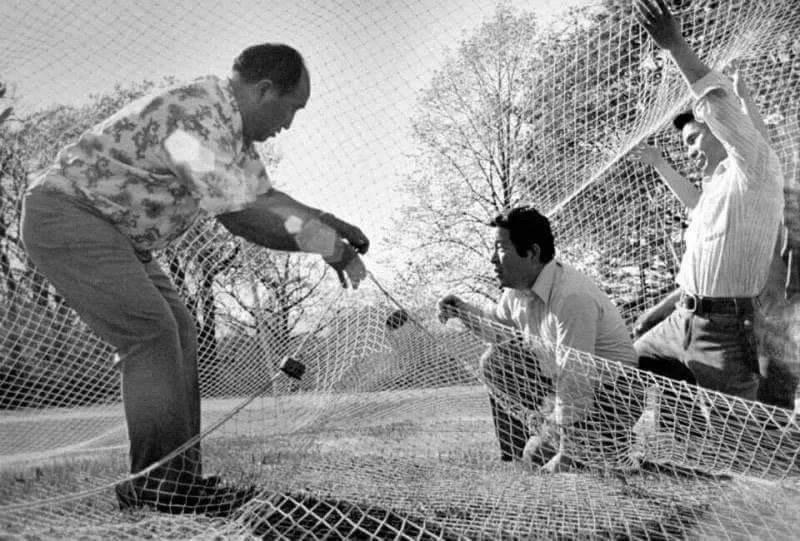
He told us that it was a box trap for catching carp in the Hudson River. We all went down to the river to set it up. There was a lagoon created by a narrow inlet in the railroad berm that ran along the riverside. The lagoon flooded and drained daily as the tide rose and fell. The plan was to set up the trap in the lagoon at low tide, and when the tide came in, the fish would swim into the trap and would be caught. Father worked from a skiff, and four of the tallest brothers stood in the water and attempted to secure the four corners to four poles. I don’t know what happened, but apparently some mistakes were made, and before the trap could be anchored, the tide flooded in, and it got pretty dicey. One brother had to be pulled out before he drowned. Time and tide wait for no man, and the plan was lost. We were all sent up to the seminary for lunch, and Father remained behind. As we ate lunch and rested, Father worked on plan B. With Gerhard standing in the water holding the skiff, Father strung an improvised net all the way across the lagoon. We were called back as the water ebbed out, and as the mud flat emerged, hundreds of flopping, wiggling carp appeared. All we had to do was crawl on our bellies in the mud and devil’s heads and wrestle each fish up onto the bank. Of course, we had all arrived for the day’s fishing in suits and ties. We were given access to the barn, where there was a big accumulation of used clothes. My only problem was footgear. I found a pair of sneakers that fit, but they had no laces. What I did was put the sneakers on and a pair of socks over the sneakers to keep them on. Later in the day, In Jin Moon saw me and laughed. “What are you wearing? It looks so funny.” Hey, it worked. I don’t remember how many carp were caught that day, maybe around 300. I saw them completely fill the bed of a dump truck. We all felt victorious that day. Father took responsibility and made it happen. The next day, we all went to East Garden and celebrated True Parents’ wedding anniversary. At that time, Father asked Mother to give her testimony. She talked about her painful course, and she cried and cried as she talked. At the end, she said, no more tears.
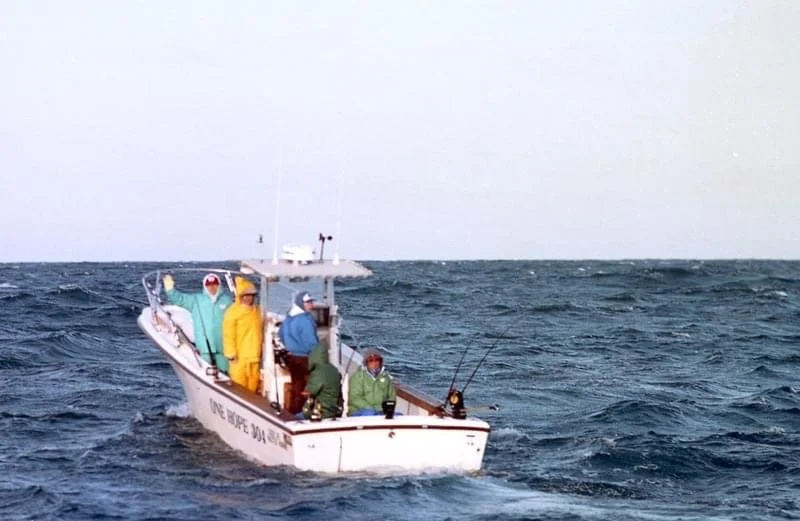
Years later, I met Father again in Alaska. In 1983, I was fishing for the giant bluefin tuna with Ocean Challenge out of Gloucester, Massachusetts. I was crewing for Dr. Tyler Hendricks on a good-go boat. Dr. Hendricks was an old comrade and had just graduated as the first UTS grad to go on and get his PhD. Of course, Father appointed him to be the head of Ocean Church. We had a great summer hanging out, and we caught nine tuna. Once, Father came out to the grounds to see Dr. Hendricks. Father’s boat came alongside, and I caught the lines and held the two boats together. Father started talking about various knots and what they are best used for. Then he talked about Ocean Church and his vision for the ocean. He explained clearly why ocean training was important. He told us that living on the ocean is more difficult than life on shore. If you train to do the difficult things at sea, those same things will become much easier on the land. When the difficult things become easy, you can lead other people. His words that day reinforced my desire to go to sea. A couple of weeks later, they asked me if I wanted to work in Alaska on the boats. I didn’t hesitate. I was informed that they needed two guys and, if I wanted to go, I had to be interviewed by Father. That day, I was taken by boat out to the northwest corner to meet Father. The interview took place via the VHF radio. Daikon Onuki translated. Father said that if I went to Alaska, I would have to carry a million dollars in one pocket and a pistol in another. I told him I was an ex-Marine, and I could do that. He said, “Go right away.” I and another guy were on a flight out of Logan that night.
When we arrived in Kodiak, Alaska, True Parents and Heung Jin Nim were already there and staying at the Bancroft House.
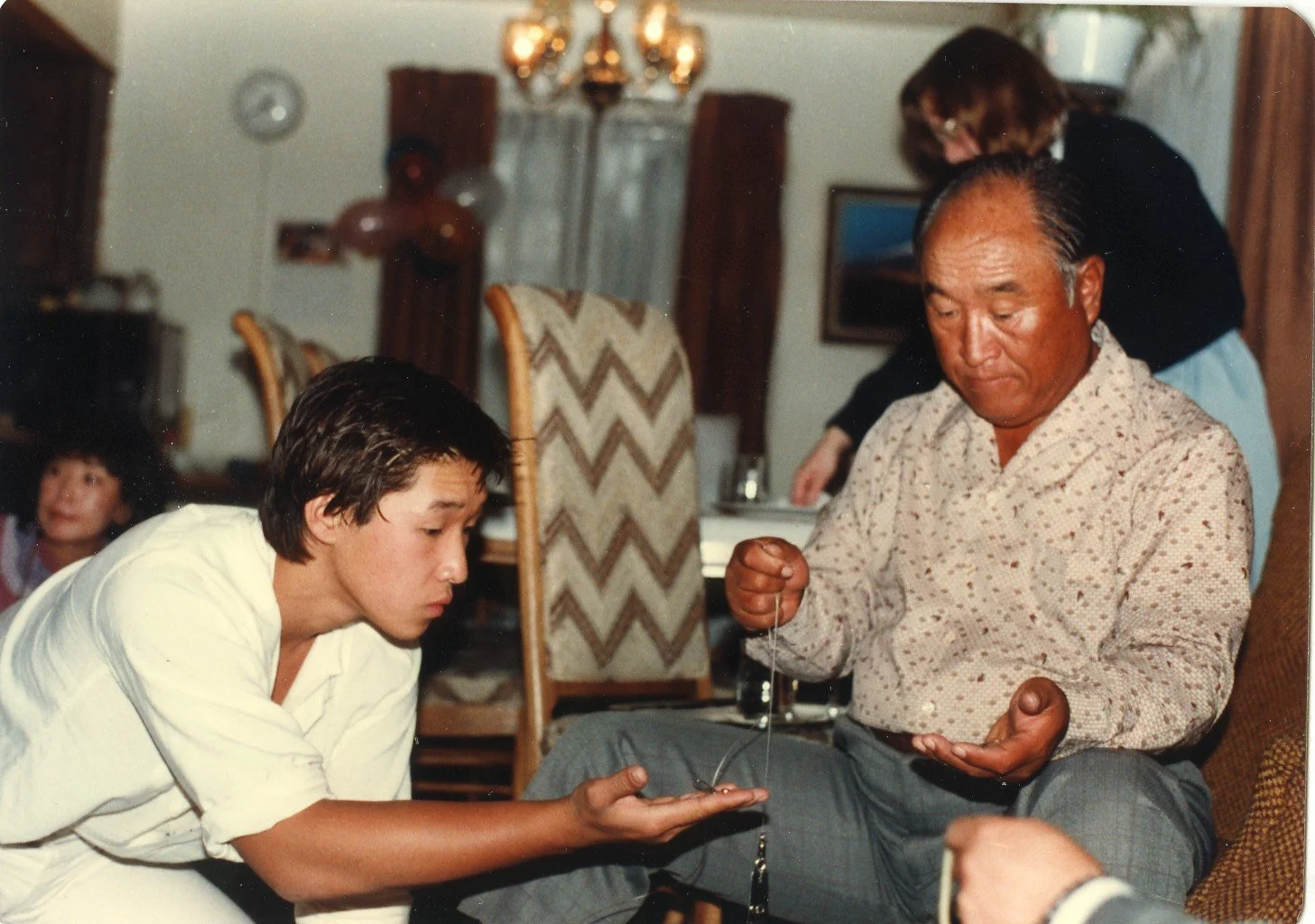
Since we had just arrived, we were invited to have dinner with True Parents. The table sat about eight people, and the menu was king crab. I put my head down and focused on eating. Finally, Father said, “Mack, do you like king crab?” Father asked in English. In Alaska, Father always called me Mack for some reason. I replied shakily, “Yes, it’s my first time.” Father said, “Good, eat a lot.” Later, Mother asked Mr. Choi in Korean, “Who are these two guys with the bushy beards?” Mr. Choi told her we were Ocean Church brothers, and we grew beards to hide our baby faces. That night, we all sat with Father in the living room, and he demonstrated and taught us how to make an elaborate rig for catching halibut. He was skilled in building tackle, his fingers nimble and hands strong. The next day, we all boarded floatplanes and flew to Shuyak Island to fish for halibut. Our guides were a couple who were homesteaders on the wilderness island. The plane landed in the small bay where the homestead was located and motored up to the shore. Everyone stepped off the pontoon and waded up to the beach. Since I was wearing waders—thigh-high rubber boots—I carried Mother on my back up to the beach. Red and his common-law wife, Deb, invited everyone into their small cabin and served tea and coffee. They talked to us about their self-sufficient lifestyle. Later, Father talked about this couple and said they were an ideal couple and reminded him of Adam and Eve living in the Garden of Eden. We spent the rest of the day fishing for halibut. Heung Jin Nim was with us that day. My impression of him was that he was such a gentle young man. He wore all white clothes and a big, floppy hat. He immediately made friends with the cat that lived at the Bancroft House and talked to us about his cats back at East Garden.
My most enduring image of Father is him sitting cross-legged, back straight, on the engine cover of a good-go boat. No matter what the weather or sea conditions, he always sat staring out to sea, unchanging. When I remember him on the ocean, I remember his unchanging posture, completely in control of his mind and body in the midst of the constantly changing marine environment. I greatly admired this persona of self-control because I myself always struggled to control my mind and body.
Locations around Alaska
At that time, I was running the company’s salmon operation at Egegik in the wilds of western Alaska. We had prepared a lot to someday welcome True Parents to our windswept outpost. We built a guest house and stocked it with all the things we would need to attend True Parents. We also bought a late-model SUV and had it flown out to drive them around. When we got the word from Kodiak that they were coming, we had a Korean sister and a plane full of Korean food flown out. We then stood by. When the call came that they were wheels up out of Kodiak, we had less than an hour to wait. The problem was the weather. We were socked in. The thick fog was right down on the deck. Our airstrip was, in fact, the beach. I was in the SUV on the beach with a handheld VHF radio when I established contact with the pilot. He couldn’t see the ground. I turned on the headlights and drove up and down the strip. I could hear the plane’s engines as it flew lower and lower. I tried to talk him down for more than 20 minutes. It was a moment of truth for me. Could we welcome True Parents, or would the weather steal our blessing? As I look back on it now, I realize how foolish I was. Luckily, the pilot had no messianic vision and decided to turn back.
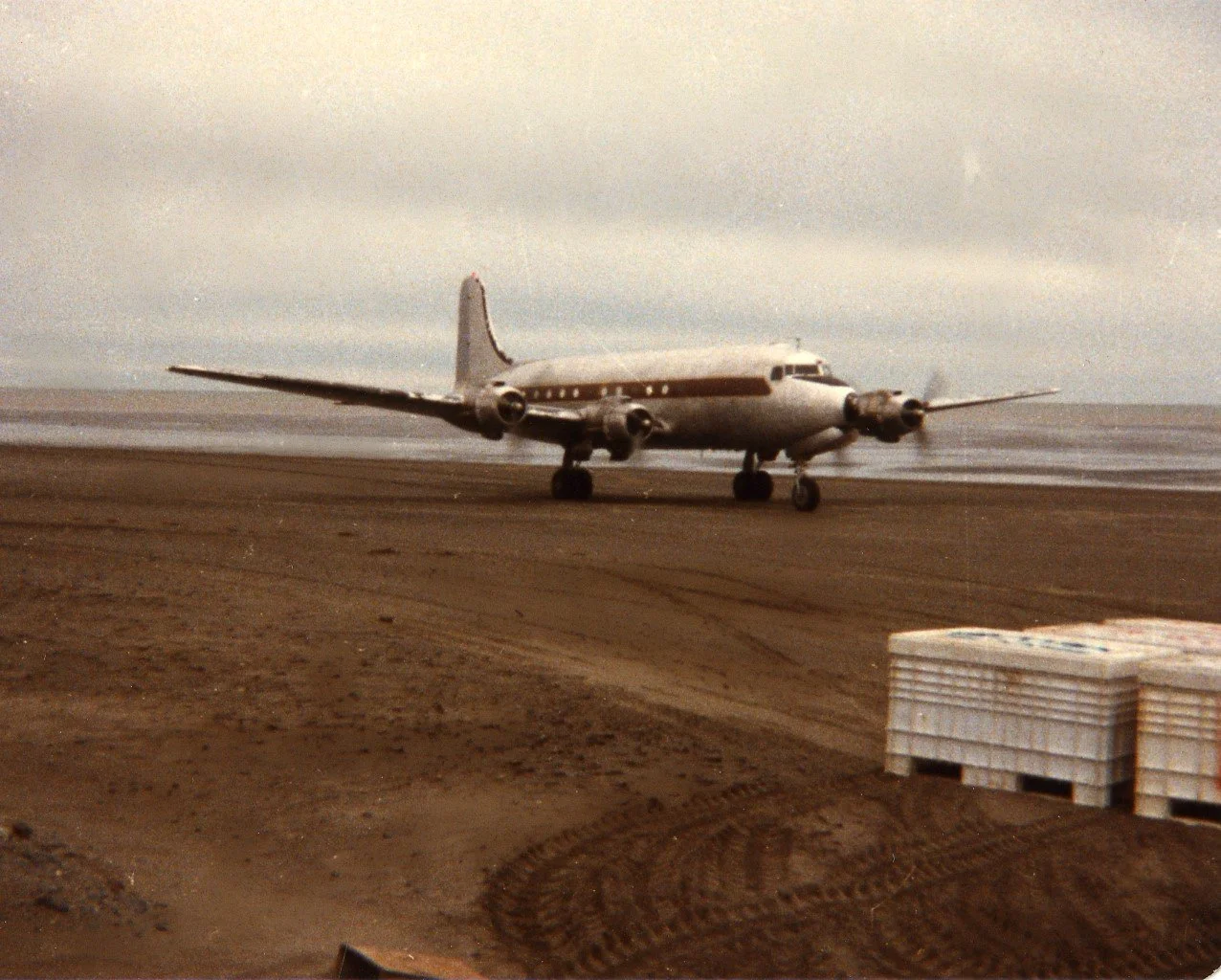
All photos contributed by Micheal Downey
Several days later, they tried again, and this time the weather cooperated. I toured them around the plant, and we had lunch together at the guest house. Father told me that I was a lucky man because I was able to live in this paradise of ocean, rivers, and tundra. He said he envied me. Of course, the main point of the trip was to fish. This was late August, and what was left of the salmon run was up in the river and wouldn’t take a hook. I knew this but failed to clearly report the real situation. I had learned early not to give a pessimistic report. Anyway, there was a small chance that we could snag something. I drove them down the beach and up along the Egegik River to a spot where I had stashed a skiff. Along the way, we had to cross the land of one of the local legends—a hard-drinking fishing captain who had opened a hunting lodge on the river. We stopped briefly, and I introduced them. To get down to the riverbank, we had to drive down a trail that was rough and washed out. The alder bushes scraped both sides of the truck, and no matter how carefully I tried to drive, everyone was bumped and tossed around. The skiff was an 18-foot flat-bottomed aluminum boat with a 40-horse Johnson kicker. It was a typical western Alaska workboat. I had tried to clean it up as befitting the guests. We loaded up the guests and the gear and set out. In the boat were Mr. Choi’s son, me, and True Parents. Needless to say, it was not a stellar day of fishing. By the time we started upriver, the tide had already turned, and the sandbars became a problem. Although the flat-bottomed boat was pretty good in shallow waters, we kept running aground on barely submerged sandbars. I tried to keep to the channels, but before long, I was in the water pushing the boat off the sandbars. Mother was in fairly good humor and at one point announced, “Oh, Mack, swimming in Alaska.” The fishing was nonexistent. We moved the boat, and Mother and Father cast again and again. Over and over, Mother gently urged Father, “Let’s go.” Father grimly ignored her. To add to the good time, the mosquitoes swarmed us. Finally, Mother made a joke using a play on two similar Korean words, moegi meaning mosquito and mool gogi meaning fish: “We can’t catch fish; only we catch mosquitoes.” Finally, Father said, “Let’s go back.”
Back at the guest house, we had tea and snacks and waited for the plane to come and pick them up. Father told us that I had a special kind of character because I was a former Marine. Then he ordered me to get a bulldozer and fix that trail down to the river. Of course, I said, “Yes, sir.” But what could I really do? The land was owned by the state of Alaska and was adjacent to a salmon stream. I could borrow the equipment and do it in the dead of night. The legal exposure would be huge, and the PR fallout would damage our ability to work in the area. Furthermore, during the very next spring flood, the trail would be washed out all over again. How could I explain these complexities to Father? But Father had ordered it done. I have a great deal of sympathy for the leaders who were with Father constantly.
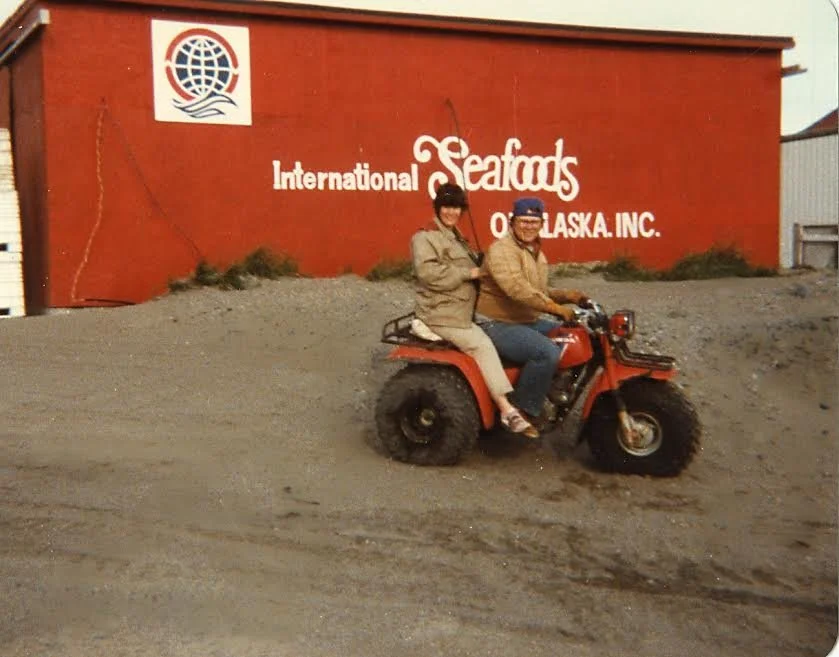
One day at North Garden in Kodiak, Father stood up to sing, and to my delight and surprise, he sang “At the Café (카페에서).” This Choi Jin Hee song was popular in Korea in the 1980s. The final line is, “Love is just a memory (사랑은 기억이 나라),” which Father sang twice—once in Korean and then in English. These are just my personal memories of True Father. They mean everything to me.