By Robert Beebe
The following true short story is based on a newspaper clipping from Feb. 17, 1914. The main character is my great-grandfather.
all photos submitted by R. Beebe
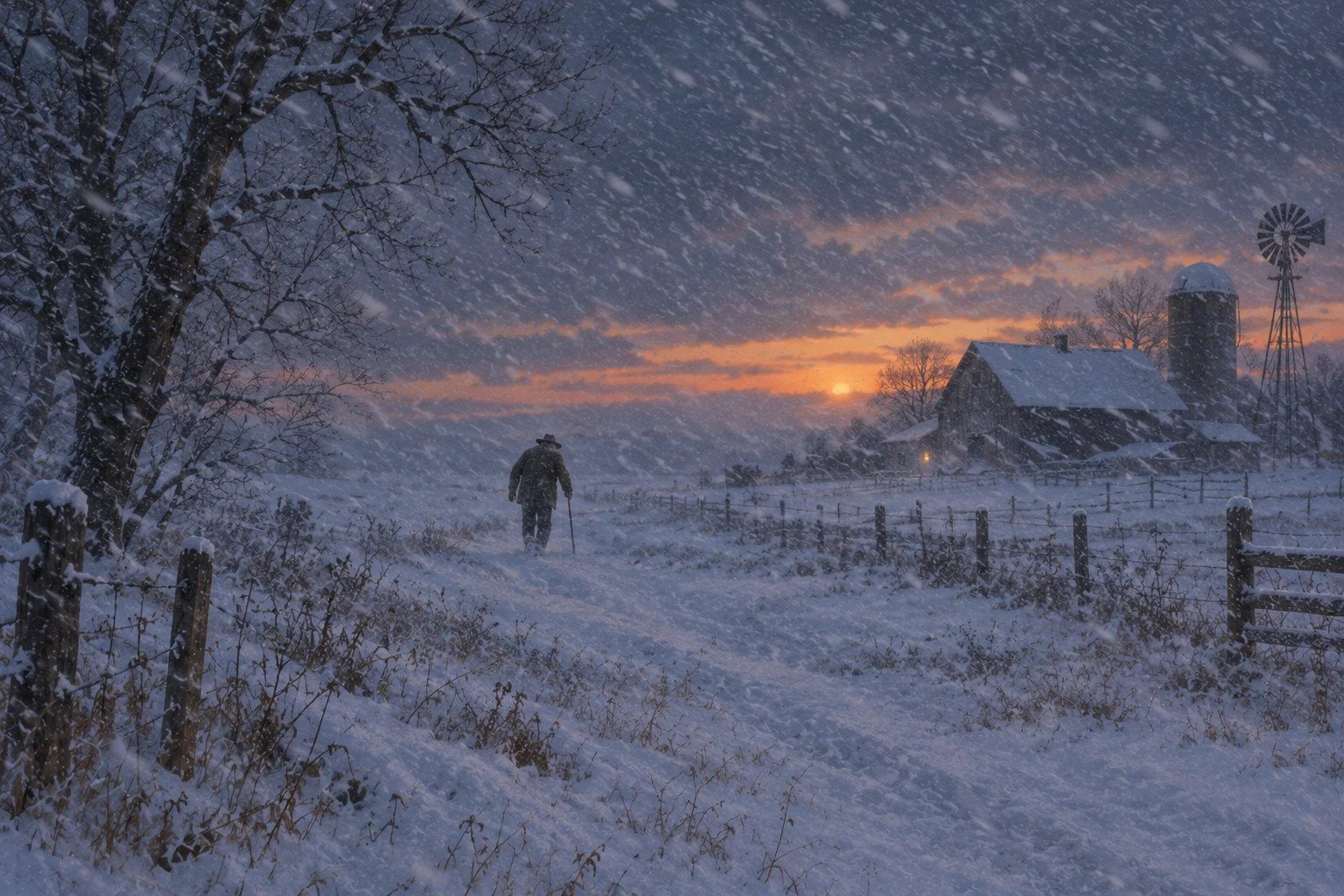
Lavine’s Tavern was a popular place. Snuggled at the edge of town, it was a favorite rendezvous for friends and a last stop for travelers heading out of town into the Connecticut countryside. This evening it was particularly lively as many of the townspeople of Colchester had gathered inside as a refuge from a snowy nor’easter that had descended upon all of southern New England. It had been a riotous evening as the storm’s blustery winds pummeled the shutters of the windows. The brown rustic interior seemed all the more cozy for it.
A group of men sat around a table in the corner. Beer bottles and playing cards were scattered everywhere.
“Tha’ cleans me out, genel’men,” slurred Michael Early, a local farmer, as he rose unsteadily to his feet. “Time ta go home.”
Early was a frequent customer at Lavine’s, known for his heavy drinking and propensity to gamble. Popular and genial in public, he could be counted on to regale his friends with humorous anecdotes about life on the farm, especially after he got a few drinks in him. At home, it was another story, where he could often be abusive, particularly when challenged by his wife for misusing the family’s money. As his two children grew older, they were frequent observers of ugly confrontations between their parents. Recently, his eldest, Frank, now 18, found himself on occasion in the position of protecting his mother from the blows of his inebriated father.
“Have you seen the weather outside, Mike? You’ll never make it on foot.” Owner Ted Lavine was behind the bar washing beer glasses. Four other farmers he’d been playing poker with were already engaged in another hand.
“I’ll be a’righ’,” Early responded as he struggled with his brown flannel coat. “My hired hand’s out there with his ox team. I’ll catch up with ‘im. Now, where’s ma hat?”
Early whirled around looking for his woolen hat that had fallen on the floor under a chair. Spotting it, he leaned over and nearly fell down as he grabbed it.
“For God’s sake, Mike, at least call Mary. The phone’s right here.” Lavine pushed the black phone on the counter towards Early.
“Mary? Hell, if I call ‘er in the condition I’m in, I’ll never hear th’ end of it.” Early stood by the door swaying slowly back and forth. “Better I get some fresh air. By the time I’m home I’ll be all sobered up.”
As Early opened the heavy oak door, a blast of cold wind and snow flew into the one-room tavern. Early stood at the entrance looking out as if he was having second thoughts.
“Close the damn door,” shouted one of the poker players.
Early turned and glanced back at Lavine with a dazed look. Pulling his collar up around his neck, he stepped out into the frigid cold night closing the door behind him.
Outside the wind howled and blew heavy snowflakes into his face. Squinting, the old farmer tried to see what was in front of him but could barely make out anything. After a couple of steps, he stopped to try and get his bearings.
“Lessee now, where’s the damn road?” Early stumbled a few steps forward and came up against the giant oak tree that stood in front of the tavern. Early knew the road was just beyond. A snowdrift was beginning to mount against the tree as he turned left to head home.
The Colchester Road was a winding thoroughfare that connected the towns of south-central Connecticut. Barely wide enough to allow two wagons to pass each other, in 1914 it was the main road leading from Lavine’s Tavern to his farm in East Haddam about three miles away. Forests and farms dotted both sides of the road which, even on a mild day, was lightly traveled. Tonight, with a blizzard raging, there wouldn’t be anyone on the road. Early’s hope was that his farm hand, Walter Weaver, who had left the tavern earlier, would be not far ahead and that he could catch up. In his clouded mind, Weaver had left only a few minutes before him. In reality, it had already been 45 minutes since he had left the premises.
As he turned into the road, Early began to cry out, “Walter! Walter?” It was a vain hope that anyone could hear him beyond a couple hundred feet in the howling wind, much less the mile or two that no doubt now separated them. After several attempts, Early gave up and began trudging through the accumulating snow. He stayed in the middle of the road where the depth was shallowest. The frigid wind bit into his steadily freezing face. It seemed to him he was always walking into the wind no matter how many twists and turns the road took. The old farmer began to feel a numbing sensation crawling up his legs. His gloveless hands, thrust deep into the pockets of his coat as clenched fists, started to feel like solid balls of ice.
Early was right about one thing: the cold air had quickly sobered him up. At the same time, he felt his entire being freezing up as he struggled to keep putting one foot in front of the other.
It was about ten o’clock when Walter Weaver pulled his team of oxen into the barn. It had taken him a good hour and a half to traverse the three miles home. He had gone out of the tavern thinking his employer would be right behind him. Seeing it was getting late, he had nudged Early about leaving while he was in the middle of a poker game. Early told him to get the oxen ready and that he would be right out. After waiting outside in the wagon for a quarter of an hour and seeing the snowdrifts building in the road, Weaver thought he better get moving if he was going to make it to the farm at all. Thinking Early had decided to spend the night in Colchester—he’d done it before—Weaver focused his attention on getting himself home.
As he entered the farmhouse, Early’s wife Mary and son Frank were sitting at the kitchen table. Lines of worry stretched across their foreheads.
“Thank God, you’re home,” Mary said, as Weaver stomped his frozen feet on the wooden floor. Not seeing anyone behind him, she asked apprehensively, “Where’s Mike?”
“Can’t say for sure, ma’am,” the hand said, looking at her sheepishly. “I thought he was right behind me. I waited, but I guess he decided to stay.”
Mary rose up from her chair. “Stay? Stay where? Where were you two?” The sound of anger floated out with the last word.
“Well, ma’am, you see, your husband wanted to stop at Lavine’s on the way back from market. You know how he is. Well, one thing led to another, and he got caught up in this card game and…”
“I knew it!” Mary was fuming. “He can’t pass by that place without going inside. Not even a blizzard can stop him!”
Mary looked up at the clock. It was now nearly 10:30. “What time did you leave, Walter?”
“Must’ve been ‘bout 8:30, even a bit earlier, I suppose.”
“Are you sure he was planning to stay there?”
“Well, no ma’am, I can’t be sure. Like I said, I thought he’d be right behind me.”
“And when he didn’t come, you just left him there? Knowing he’d been drinking? Walter, how could you?”
Weaver just stood staring at the floor like a small child, not knowing what to say. His mind was a muddle of confusion and regret.
Mary took charge. She turned to her 18-year-old son. “Frank, get the team and go look for your father. Hopefully he had enough sense to stay inside, but, who knows, he could be stumbling along the road out there trying to get home.”
Her gaze fell on the shamefaced Walter. He looked like he was about to cry.
“Oh, for God’s sake, Walter. Go to bed.
To be continued next month…