
Dance, Dance, Dance
Submitted by Christine Libon

You will not find an actual dance demonstration on this video; rather, you will find factual information about how various movements in dance offer great benefit to many parts of the body, including the spine, which, as we know, has numerous nerve endings and communicates directly with the brain and all body parts.
https://youtu.be/KJAj6JCiRdo?is=_yBDrmVrt3X43uRj
Here are some of the strongest scientific studies supporting the relationship between dancing and cognitive ability:
1. Verghese et al. (2003) – Albert Einstein College of Medicine
Study: Leisure Activities and the Risk of Dementia in the Elderly
Published in the New England Journal of Medicine.
Followed 469 adults aged 75 and older for about 5 years.
Among 11 physical activities studied, frequent dancing was the only physical activity significantly associated with a lower risk of dementia.
Researchers proposed that dancing combines physical exercise with mental challenge, memory, coordination, and social interaction, making it uniquely stimulating for the brain.
2. Meng et al. (2020)
Study: The Effectiveness of Dance Interventions on Cognition in Patients with Mild Cognitive Impairment: A Meta-analysis of Randomized Controlled Trials
Published in Archives of Gerontology and Geriatrics.
Combined results from multiple randomized controlled trials.
Found that dance significantly improved:
Global cognition
Attention
Immediate and delayed memory
Visuospatial ability
Concluded that dance is an effective non-drug intervention for people with mild cognitive impairment.
3. Wang et al. (2023)
Study: The Effectiveness of Dance Movement Interventions for Older Adults with Mild Cognitive Impairment, Alzheimer's Disease, and Dementia
Reviewed 29 studies involving 1,708 participants.
Found significant improvements in:
Overall cognition
Memory
Balance
Depression
Concluded that dance is an effective and engaging complementary intervention for older adults with cognitive impairment.
4. Network Meta-analysis (2025)
A recent systematic review compared dance with other forms of exercise.
Dance ranked among the highest interventions for improving global cognitive function.
However, it found that dance was not consistently superior to all other forms of exercise, suggesting that while dance is highly beneficial, other well-designed exercise programs can also produce cognitive benefits.
5. German Brain Imaging Study
Researchers compared older adults who participated in:
Dance classes
Traditional endurance training
Both groups improved physical fitness, but only the dance group showed increased hippocampal volume, a brain region essential for learning and memory. This suggests that learning new movement patterns may stimulate brain plasticity beyond aerobic exercise alone.
Balanced perspective
The evidence overall is encouraging, but it's important to distinguish between different questions:
There is strong evidence that dancing improves several aspects of cognitive function, particularly in older adults and those with mild cognitive impairment.
There is moderate evidence that regular dancing is associated with a lower risk of dementia, though observational studies cannot prove that dancing alone prevents dementia.
A Cochrane review concluded that there is not yet enough high-quality evidence to determine whether dance movement therapy specifically is an effective treatment for people who already have dementia, highlighting the need for more randomized trials.
Overall, the research suggests that dancing is one of the best "whole-brain" activities because it combines aerobic exercise, learning, memory, rhythm, balance, coordination, emotion, and social interaction in a single activity.

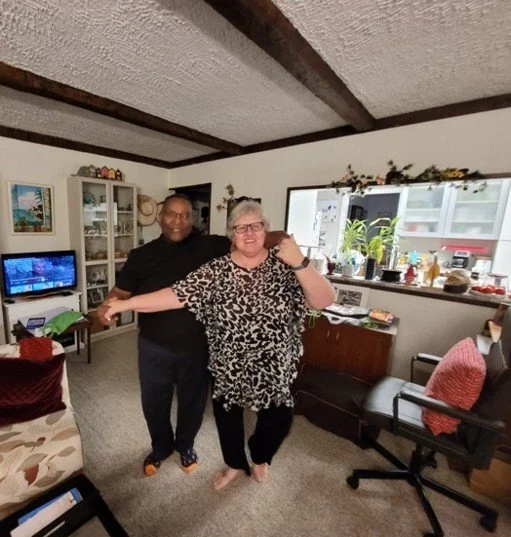
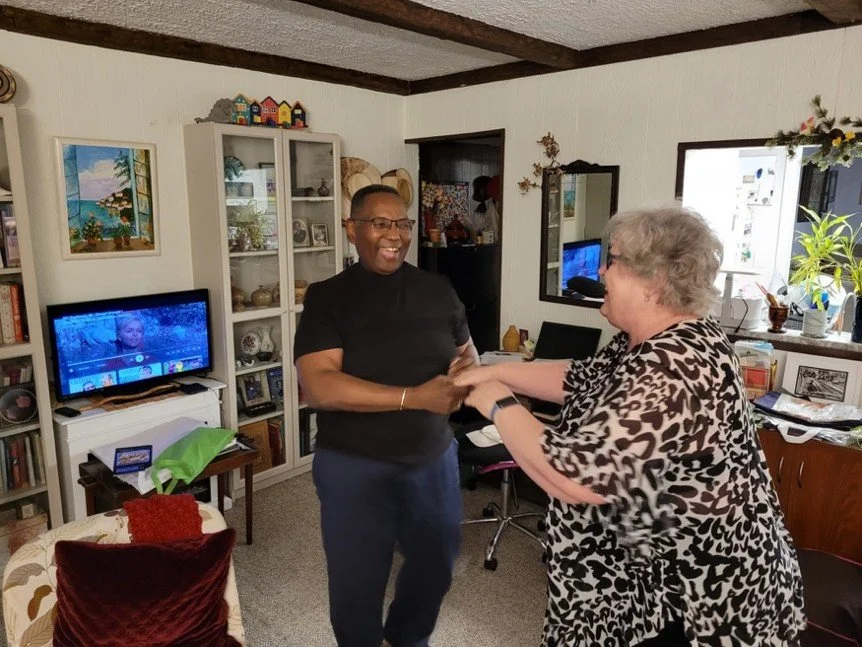

all photos submitted by C. Libon