
A History of Korea, Part 12
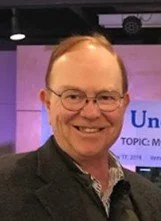
Photo submitted by M. Downey
By Michael Downey
I first visited South Korea in 1995. I flew into Gimpo Airport without a plan, with nothing but the spirit of adventure and a little cash in my pocket. I hopped into a taxi with no language skills and no destination to help the driver. I just said, "Seoul," and pointed. On the way, I found a pile of brochures to look through. I found a likely-looking hotel called the Young Dong Hotel.
The driver was pleased that I had come up with a place to land. We sped down the freeway along what I assumed to be the Han River. Night had fallen, and the light show was spectacular. This was no Asian backwater village; it was a built-up, modern-looking city and was packed with rushing taxis, buses, and cars.
Before long, we exited the freeway and threaded our way between tall buildings and the urban cityscape. When he pulled up in front of an obvious hotel, we quickly settled up, and my luggage was deposited before the great brass doors of the Young Dong Hotel. An actual bellhop grabbed my bags and led me to the front desk. For the not-so-modest fee of about $80, I had a room. The hotel was a tourist hotel built to cater to foreigners and citizens visiting Seoul from the hinterlands. The room was adequate, clean, and on the eighth floor.
I sat and looked out the windows for a while but was too excited to sleep and headed out to have a look. It was 11 o'clock at night, but the streets and sidewalks were alive with people. I wandered around for a while and discovered that in the basement of the hotel was what I learned was a "nite," what I assumed was a nightclub with music and drinks. And it was, but it had a whole culture and set of rules that I didn't yet understand.
I walked right in and sat at a table, which sent the staff into a panic. It took them a while to find someone who had enough English to talk to me. The young man tried hard, but he certainly did not have enough. He used sign language, mostly with crossed arms, to tell me I couldn't come in. I was appalled. I had never been told such an absurd thing.
His final words were, "No foreigner, no foreigner." I refused to leave, and that left them in a quandary. What could they do? They told me I had to buy a "kibun." The guy pantomimed three bottles, and I said, "OK." As I waited, I was excited and ready for anything. The club was filled with people of various ages. There seemed to be few couples but many more groups: groups of men, groups of women, and a few mixed groups. There was a DJ who pumped out what I learned later was K-pop. There were one or two couples up dancing, but mostly groups got up and danced together, often women with women.
It was intriguing. The waiter came back with three huge bottles of OB, a local brew, and an even bigger basket of fruit: pineapple, apples, oranges, grapes, and other delights. This was the 기분, the basic order. It was ubiquitous and required in all drinking establishments in Korea. No matter how vigorously a foreigner argued that he wasn't hungry, the 기분 was never dispensed with.
As I sat there alone and tried to put a dent in the 기분 designed for four people, I watched what was going on around me. One curious ritual interested me, and after a while I figured it out. A waiter would go to a table of young men, apparently summoned, he would talk with one guy and subtly indicate a particular table of young women. The waiter would go over and negotiate with a lady and escort her back to the interested man. They would talk, and if both agreed, they became a couple for at least the evening. It worked both ways, initiated by the man and initiated by the woman. I observed everything but the passing of the tip to the waiter. He worked on tips and was, in fact, a middleman and a matchmaker. This is known all over Korea as "booking." I had many other adventures in Korea, and they were all learning experiences. But that night I learned some important things. First, I learned I could go anywhere and do anything I wanted if I insisted.
Being white and American was magic. I could have been English, German, Australian, or any other brand of Westerner. To almost all Koreans, I was American. No matter how progressive or anti-foreign a Korean was, deep down inside they knew that America was the savior of and guarantor of Korea. I was a representative of America. I walked around like I owned the place, and people recognized it. Next, I learned that everything in Korea was different from what I knew. Even if it looked similar, the essence and often the meaning were going to be different. The difference was based on the difference between cultures and history. It was important for me to keep my eyes wide open and learn about these differences. Once I met a young guy who wanted to be friends. It was the height of fortune for a Korean to meet a foreigner who was open.
It was very rare to talk to, let alone be friends with, an American. He was a graduate student at Korea University and about 27 years old, having completed his mandatory military service. He was from Chunju, a city in the far-off countryside. He was 27, but his parents still kept his room for him. I learned that this was normal. Until a child got married, he or she still lived at home with parents. It was so normal that if you met someone who didn't live at home, you could guess that there was something wrong. I also learned that rituals had rules, even if not logical. Women had friends, held hands, and hugged. They were not lesbians, just friends. Running out of money, I learned I had a skill that was highly marketable everywhere in Korea: I could speak English and could teach it.
Keeping such things in mind, I went back to America. At the next opportunity, in the year 2000, I returned to Korea. My wife asked me how long I would be gone. I answered, "Ten years." She didn't believe me and laughed. I stayed for 21 years. Three years later, she joined me. For the first six months, I lived with a friend and his family in Seoul. I became an English teacher and spent my free time researching and absorbing the Korean culture and language. In the beginning, I thought about what materials and textbooks were best to use. In a short time, I realized that I was the textbook. Actual books were just supplements.
Jobs beat a path to my door. Koreans have an absolute passion for learning English. From kindergarten, through grade school, middle and high school, the university, and into adulthood, Koreans passionately studied English. And yet they didn't make rapid progress. They had only book learning from a teacher who majored in English literature but could only teach grammar. But they had no opportunity to actually speak English. I gave them that chance, and they ate it up. Well, most of them. Kindergartners through middle-schoolers had little interest in anything more than singing songs and playing games. Senior citizens were my favorite students. They didn't cry or hit other students. They always tried their best. I became very good at it and was a popular teacher. It kept the wolf from the door, and in the meantime, I continued to learn.
The rift between the left and the right was not obvious. Most Koreans didn't wear their politics on their sleeves. But at times the reality came to the surface. In, arguably, a spate of over-caution and an old sentiment of anti-foreign things, South Korea banned the import of U.S. beef into the country. The rationale was that one cow imported from Canada died of mad cow disease. At the time, there wasn't a ripple in Korea. By 2008, things had changed, and Lee Myung-bak, a conservative, pro-American, was president. He passed a law to rescind the ban. The issue blew up in the press and on the streets of downtown Seoul. A coalition of left-leaning groups came together to protest the move and accuse President Lee of bowing to American pressure.
Beginning with a few thousand, then a hundred thousand, and possibly a million folks turned out over the summer for candlelight vigils in downtown Seoul. I can recall meeting with two middle school girls for lessons, but they couldn't stay awake. I asked them why, and proudly they told me they had been to the candlelight vigil. I was curious and questioned them. They couldn't tell me what mad cow disease was, but they let me know that they were informed about the vigil via a text message. The text message said that Lee had bowed down to the Americans and was going to give Tok Do, the disputed islands in the East Sea, back to the Japanese. I realized that they were both lies, both designed to elicit maximum emotional response from Korean people, and were crafted to gain support to impeach President Lee. At the time, I taught classes to adults at the YMCA. I was quite popular.
One day I walked in and found a banner stretched across the front of my classroom. In Korean it said, "Resist Lee Myung-bak, mad cow disease, and the Americans." I knew it was a lie and the leftist coalition's propaganda. My mother, brothers, and sisters lived in America and ate beef almost every day. None of them had mad cow disease, and I didn't believe that any Americans were involved in forcing Korea to accept American beef. I asked the manager of the YMCA to remove the banner and explained to him why. He said no. I told him I quit. He was shocked, and there was a big uproar from the students. The manager told me he would remove the banner during my lesson times but put it back up later. I said no and walked. I immediately got another job, and many of the students followed me. The YMCA was an active part of the leftist coalition, along with labor unions, religious groups including Protestant, Catholic, Buddhist, civic and charity groups.
I tracked the common belief system to the Dong Hak movement and rebellion of the 19th century. Dong Hak believed in the philosophy of anti-royal, anti-Yang ban (noble landlord class), and anti-foreign. After liberation (WW2), those widespread sentiments were radicalized by patriots returning from Manchuria and China with Marxist ideas. Anti-royalty became anti-government, anti-Yang ban became anti-wealthy people, and anti-foreign became anti-American. Those sentiments continued, vaguely believed and ripe for radicalization, well into the 21st century. From the mad cow issue, I began to see clearly the division between left and right and the way the left could manipulate the emotions of the public to support their agenda.
When the left says let's unify Korea, what they really mean is let's unify under the North. The left says let's get rid of the Americans; they mean get rid of the U.S. Army. The newly elected president, Lee Jaemyung, has said that the U.S. Army was an occupying force, that he plans to move closer to China, and sent $8 million to North Korea in 2003 in an attempt to gain permission to visit Pyongyang.